
What Care Means
Dark Lies the IslandThe stories contrast tenderness with possession, violence, and neglect, asking whether affection protects others or merely gives the speaker a reason to claim them.
increasing Bearing strength in each event
 decreasing
Bearing strength in each eventdecreasingMick and Vivien’s Rough Affection

Love in a Noisy Room
A marriage on display
Mick Harty fondles and jokes with Vivien in front of the other bar patrons, while she responds with teasing complaint and shares details of their meal. Their physical play is public and exaggerated, yet it also shows a familiarity that the narrator finds unexpectedly moving.
Later, when the flood threatens the hotel, Vivien comforts Mick as they face danger together. Their affection persists through embarrassment, illness, and the strange behavior of the night.
Care beyond refinement
Caoimhin may judge the couple as crude, but their relationship contains an ease he does not possess. Their gestures of tenderness are neither elegant nor private, yet they offer one another reassurance when the world becomes unstable.
The story complicates the idea that civilized manners are the same as care. The couple’s bond is imperfect and comic, but it remains recognizable as a form of loyalty.
Saoirse’s Clear-Eyed Response
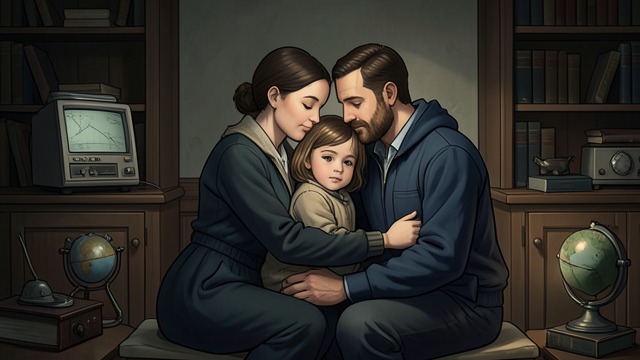
Acceptance at Home
A mother’s perspective
Saoirse does not share Jonathan’s belief that Ellie’s sexual development is an emergency. She responds to his worries with directness, reminding him that their daughter is seventeen and that she herself had been sexually active at that age.
Her calm does not mean she is indifferent to Ellie. She recognizes that adolescence includes desire, disappointment, and choices that parents cannot fully control.
Love without ownership
Saoirse’s position contrasts with Jonathan’s possessiveness. She can acknowledge the daughter’s independence without treating it as an attack on the family or on her husband.
The disagreement exposes different meanings of parental care. Jonathan wants to protect by intervening; Saoirse understands that affection may also require allowing Ellie to experience her own life.
The Father’s Beach Memory
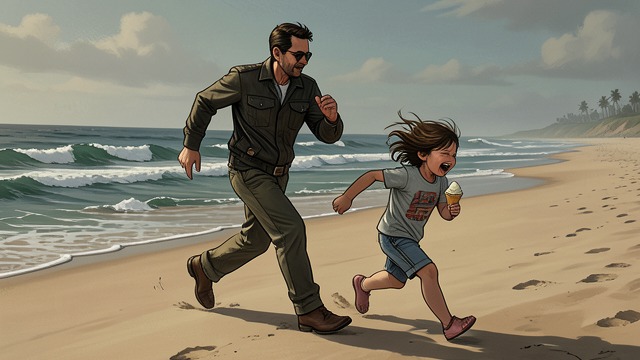
A Day with May-Anne
A shared excursion
The unnamed narrator remembers taking May-Anne to the beach at Garrettstown on a windy day. They run together along the sand, buy an ice cream before the bus, and play with the phrase “kiss-me-quick.”
The memory is small and physical, made of weather, food, and a child’s playful voice. It gives the narrator a picture of fatherhood that is warmer than the frightening world he imagines around her.
Memory as protection
When he is locked in the caravan, the beach day helps him endure hunger, fear, and exhaustion. He holds onto the memory not because it can undo his present situation but because it reminds him what his life is connected to.
His escape is powered partly by the hope that he might again be a father in May-Anne’s world. The story makes that bond a source of survival without pretending that he can immediately repair the damage between them.
The stormy evening in the Water’s Edge bar
The summer Ellie begins seeing Aodhan
The previous summer, before the narrator is imprisoned
